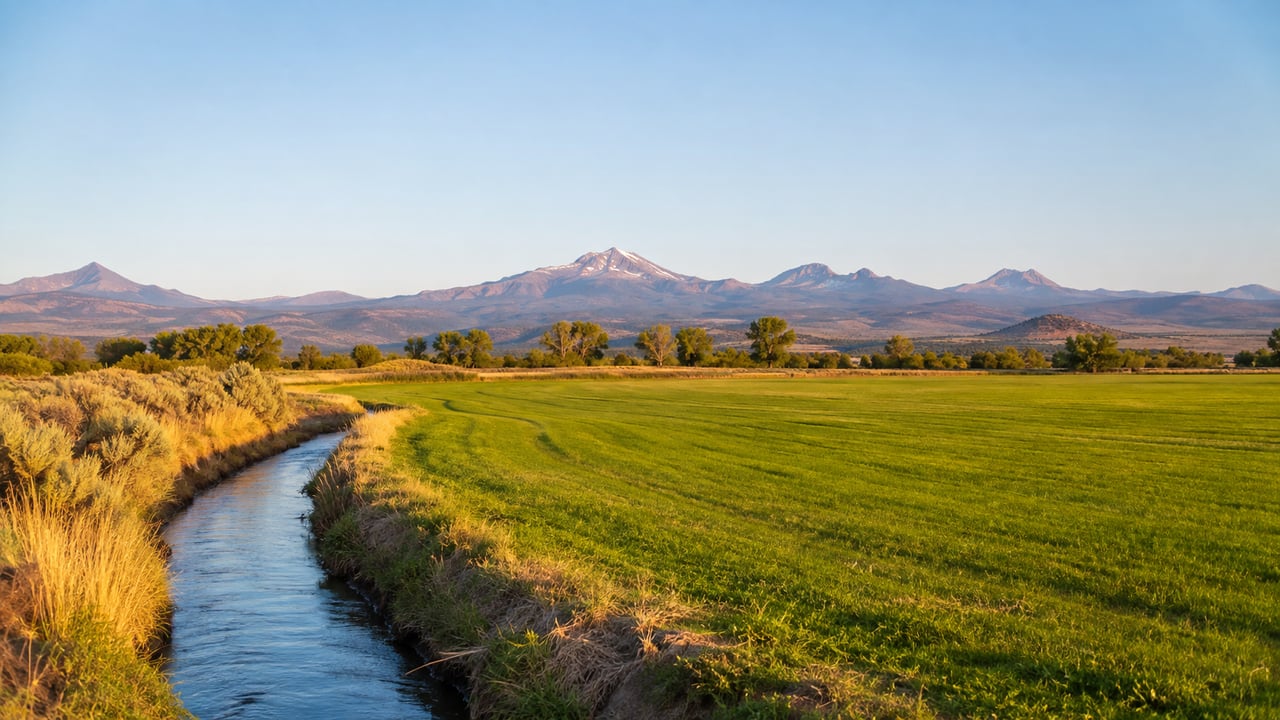
Water Rights and Irrigation in Central Oregon: A Buyer's Primer (COID)
Bend Real Estate
Bend Real Estate
For most home purchases, water is simple: you turn on the tap. But the moment you start looking at acreage, hobby farms, or rural property in Central Oregon, a new phrase shows up in the listings that confuses a lot of buyers: irrigation water rights. If you've seen a property advertised with something like "38 acres of COID water rights" and wondered what that actually means for you, this is your primer. As always, this is a general overview, not legal advice; the irrigation district and a water-rights professional are the authorities on any specific property.
COID is the Central Oregon Irrigation District, a quasi-municipal corporation established back in 1918 that delivers irrigation water from the Deschutes River through more than 700 miles of canals to tens of thousands of acres across Bend, Redmond, Terrebonne, Alfalfa, and Powell Butte. It is one of several irrigation districts in the region, and it is the largest. Importantly, COID water is for irrigation and industrial use, watering pasture, gardens, fields, and landscaping, not for drinking. Your household water comes from a separate source, a city connection or a private well.
Here is the single most important concept for a buyer to understand: in Oregon, irrigation water rights are appurtenant, which means they belong to a specific piece of ground, mapped to specific acres. When you buy a property with water rights, those rights generally transfer with the land. They are part of what you are purchasing, and on acreage they can add real value, because irrigated land in the high desert is far more useful and productive than dry land.
That is why you will see acreage listings specify the number of irrigated acres separately from the total acres. A 45-acre property with 38 acres of water rights is a meaningfully different (and often more valuable) property than 45 dry acres.
Oregon water law comes with a use-it-or-lose-it rule, and buyers need to know about it. Water rights must be put to beneficial use at least once every five consecutive years. If the water goes unused for five years, the right can be subject to forfeiture. In practice, enforcement is largely complaint-driven and cancellations are rare, but the rule is real, and the irrigation district does conduct aerial reviews and send notices about unused or dry areas. If you are buying a property specifically for its water rights, part of your due diligence is understanding whether those rights have been kept in good standing.
Say you buy an acreage property but do not intend to irrigate every acre. You are not stuck. The district offers options: you can lease water rights instream for a season (which also helps river health), permanently transfer rights to a different location, or in some cases sell rights to an approved buyer. These programs exist precisely so patrons can keep their rights in good standing even in a year they do not need all the water. The takeaway: water rights are a flexible asset, not just an obligation.
Water rights are one of the things that make Central Oregon acreage special, and also one of the most misunderstood parts of buying rural property here. They add value, they come with responsibilities, and they reward a little homework. If you are considering an acreage or farm property and want help understanding its water picture alongside everything else, that is exactly the kind of detail we dig into with our clients, and we will point you to the district for the official word. Reach out anytime.

Bend Lifestyle
Mountain Biking in Bend: A Guide from Beginner to Advanced

Sisters
Twenty minutes from Bend, a world apart. Here's what people who love Sisters actually love about it.


Bend Lifestyle
Every place has things you can do there. Bend has things you can only really do here.
Whether we’re working with first-time home buyers, seasoned investors, new residents to Bend, or anyone else, we want to help them find their ideal properties.

Rachel Greenwald Rhoads
Shana Sellers
Bend Premier Real Estate
Address
550 NW Franklin Ave Ste 108
Bend OR 97703