Wildfire Season in Bend: What Homeowners Need to Know
Living in Central Oregon means a lot of beautiful things... and one harder one. Wildfire risk is now a permanent part of the Bend homeownership equation, and how you prepare for it affects everything from insurance premiums to resale value to whether your family is ready when the smoke rolls in.
If you own a home in Bend, are buying one, or are getting ready to sell, here's what's most important to understand about wildfire season in 2026.
The Bend Reality
A few honest baselines:
- Wildfire season in Central Oregon typically runs from late June through October, with peak risk in July, August, and early September.
- Smoke events can come from local fires or from fires hundreds of miles away in California, the Cascades, eastern Oregon, or Washington.
- Some neighborhoods — especially those with wildland-urban interface (WUI) zoning, heavy tree cover, or canyon proximity — carry materially higher risk than others.
- Oregon's statewide wildfire hazard map has been controversial and revised multiple times since 2022, but insurers are increasingly using their own internal risk models regardless of the state map's status.
The takeaway: wildfire is no longer a seasonal hassle. It's a real factor in how Bend homes are valued, insured, and lived in.
What This Means for Homeowners (Right Now)
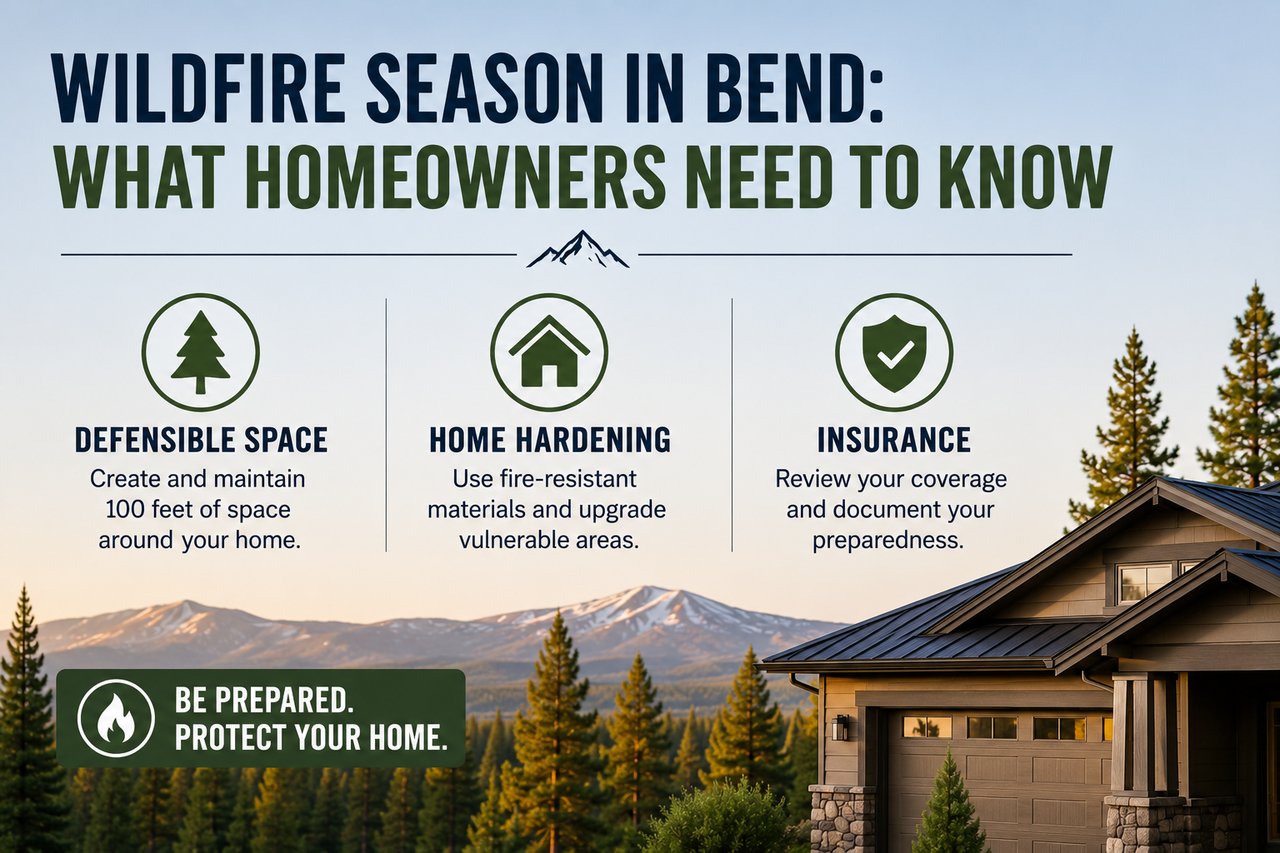
Three categories of action matter.
1. Defensible Space
The first 100 feet around your home, known as the Home Ignition Zone, is the single biggest factor in whether a home survives a wildfire.
Recommended actions:
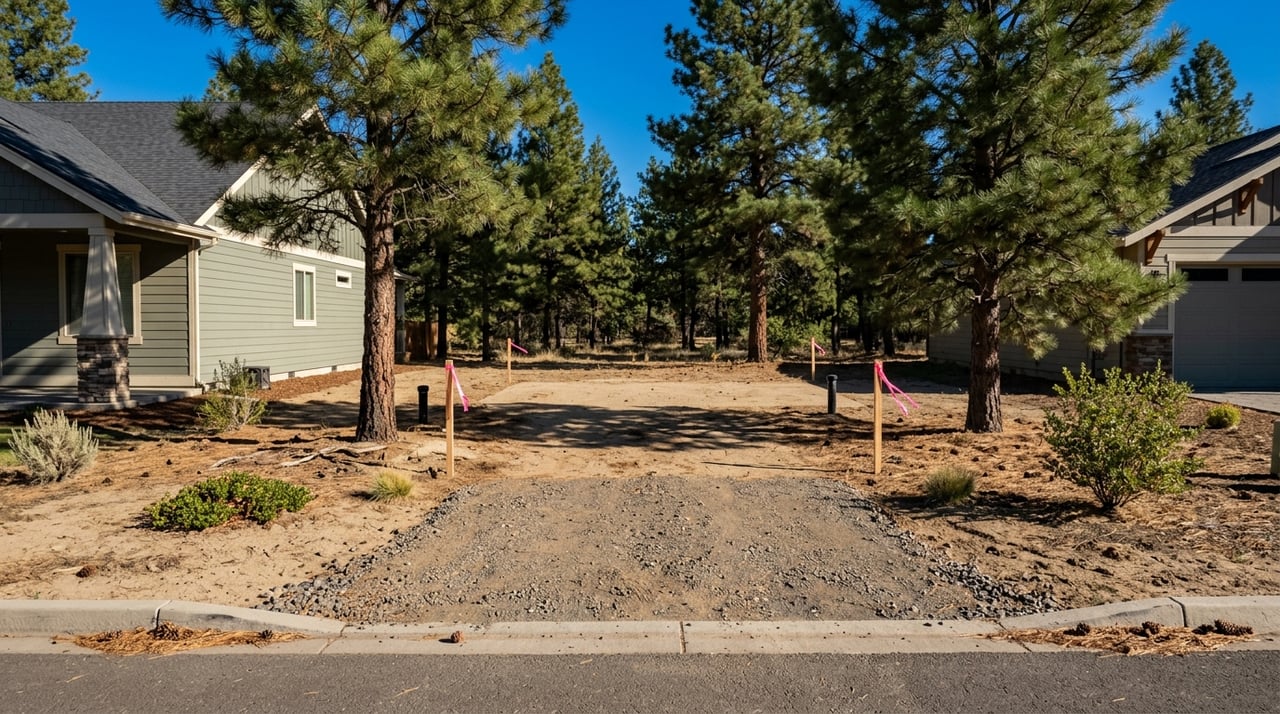
- Zone 1 (0–5 feet from the home): Non-combustible materials only. No bark mulch, no wood fences touching the house, no firewood stacked against siding.
- Zone 2 (5–30 feet): Spaced, irrigated landscaping. Trimmed trees with branches at least 6–10 feet off the ground. Lawn kept short.
- Zone 3 (30–100 feet): Thinned vegetation, removed deadfall, spaced trees, no continuous "ladder fuels" that let fire climb into the canopy.
For most Bend homes, especially on the wooded westside or rural Deschutes County properties, this is ongoing work, not a one-time project.
2. Home Hardening
Defensible space slows the fire. Home hardening keeps embers from getting inside.
The big-ticket items:
- Class A fire-rated roof (metal, tile, asphalt composition)
- Ember-resistant vents (1/8-inch mesh minimum)
- Enclosed eaves and soffits
- Tempered or dual-pane windows
- Non-combustible siding (fiber cement, stucco, metal) — or, at minimum, ignition-resistant exterior materials
- Cleared gutters and roof valleys before fire season every year
- No combustible material under decks
Most homes built in Bend in the last 10–15 years are partially hardened by default. Older homes, especially cedar-sided westside classics, often need targeted upgrades.
3. Insurance
This is where wildfire goes from "be careful" to "this affects your wallet right now."
What's happening in the Bend insurance market in 2026:
- Some carriers have stopped writing new policies in higher-risk zip codes.
- Premiums in Deschutes County have risen significantly over the past three years.
- Underwriters are increasingly using satellite imagery to verify defensible space and home hardening before binding policies.
- Surplus-lines carriers and the Oregon FAIR Plan are being used more frequently as fallback options.
- Insurance binders can fall through late in escrow if the property doesn't pass underwriting — which is why we now recommend buyers obtain quotes early in the inspection period.
Practical advice for current homeowners: Document your defensible space and any home hardening upgrades with photos every year. It can affect both renewal eligibility and rate.
What This Means for Sellers
A few patterns we're seeing in the 2026 market:
- Buyers ask about insurance early. Smart buyers want to know your premium and carrier before they even tour.
- Defensible space is becoming a showing-day expectation. Cleared eaves, trimmed trees, and a tidy "Zone 1" are part of curb appeal now.
- Homes that have been hardened or recently re-roofed tend to attract stronger insurance quotes, which makes the deal easier to close.
- Disclosure is required. Past fire damage, evacuation history, and any insurance non-renewals must be disclosed to buyers.
If you're planning to sell this summer or fall, getting your defensible space in good shape before listing has become one of the highest-ROI prep tasks alongside paint and staging.
What This Means for Buyers
Going in eyes open is critical.
We recommend:
- Get an insurance quote during your inspection period — before you remove contingencies. Don't assume coverage will be available.
- Look at the property through a wildfire lens — defensible space, roofing material, vent design, deck construction, vegetation density.
- Check the home's history in any past fire perimeters or smoke events.
- Understand the neighborhood's evacuation routes. This matters more in some areas than others.
- Factor higher insurance into your monthly budget, especially in wooded or rural areas.
Useful Resources
Local agencies and programs we send clients to:
- Project Wildfire — Deschutes County's wildfire preparedness program (projectwildfire.org)
- Firewise USA — national defensible space standards and resources
- Oregon Department of Forestry — wildfire risk maps and updates
- Bend Fire & Rescue — local burning regulations, evacuation guidance, and home assessment programs
- Oregon FAIR Plan — last-resort insurance option if standard carriers decline coverage
During Smoke Events
Some practical local wisdom:
- PurpleAir and AirNow are the two AQI sources locals trust. Check daily during fire season.
- Run AC on recirculate and keep windows closed when AQI is poor.
- HEPA filtration for at least one room of the house gives you a "clean room" during multi-day smoke events.
- Have go-bags ready if you're in a higher-risk zone, evacuation timelines are short.
- Sign up for Deschutes County alerts so you get evacuation notices directly.
The Bigger Picture
Bend's relationship with wildfire is changing, but the community has gotten dramatically better prepared over the last five years. Defensible space work, neighborhood Firewise programs, home hardening, mutual-aid response, and updated building standards have all moved in the right direction.
It's a real part of life here. It's also manageable, especially in homes that are built and maintained for the environment they sit in.
Thinking About Buying, Selling, or Hardening Your Home?
Wildfire preparedness has become one of the most practical things we talk about with clients — both because it affects insurance, value, and resale, and because it affects how a family actually lives in their home.
If you have questions about your specific neighborhood's risk, what to prioritize on your home, or what to look for as a buyer, reach out anytime. We're happy to walk through it with you.
This article is general information, not professional fire-safety, insurance, or legal advice. Always consult local fire authorities and your insurance carrier for specific guidance on your home.